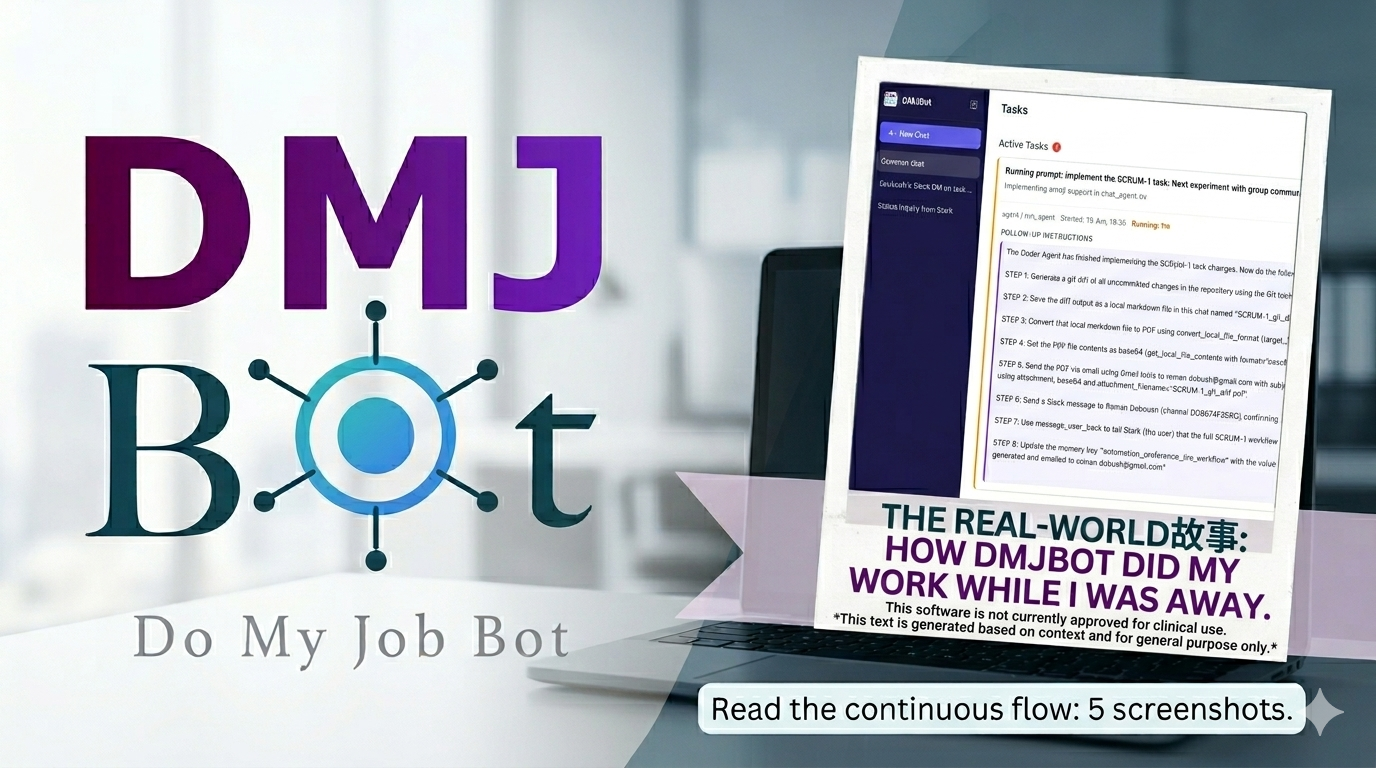
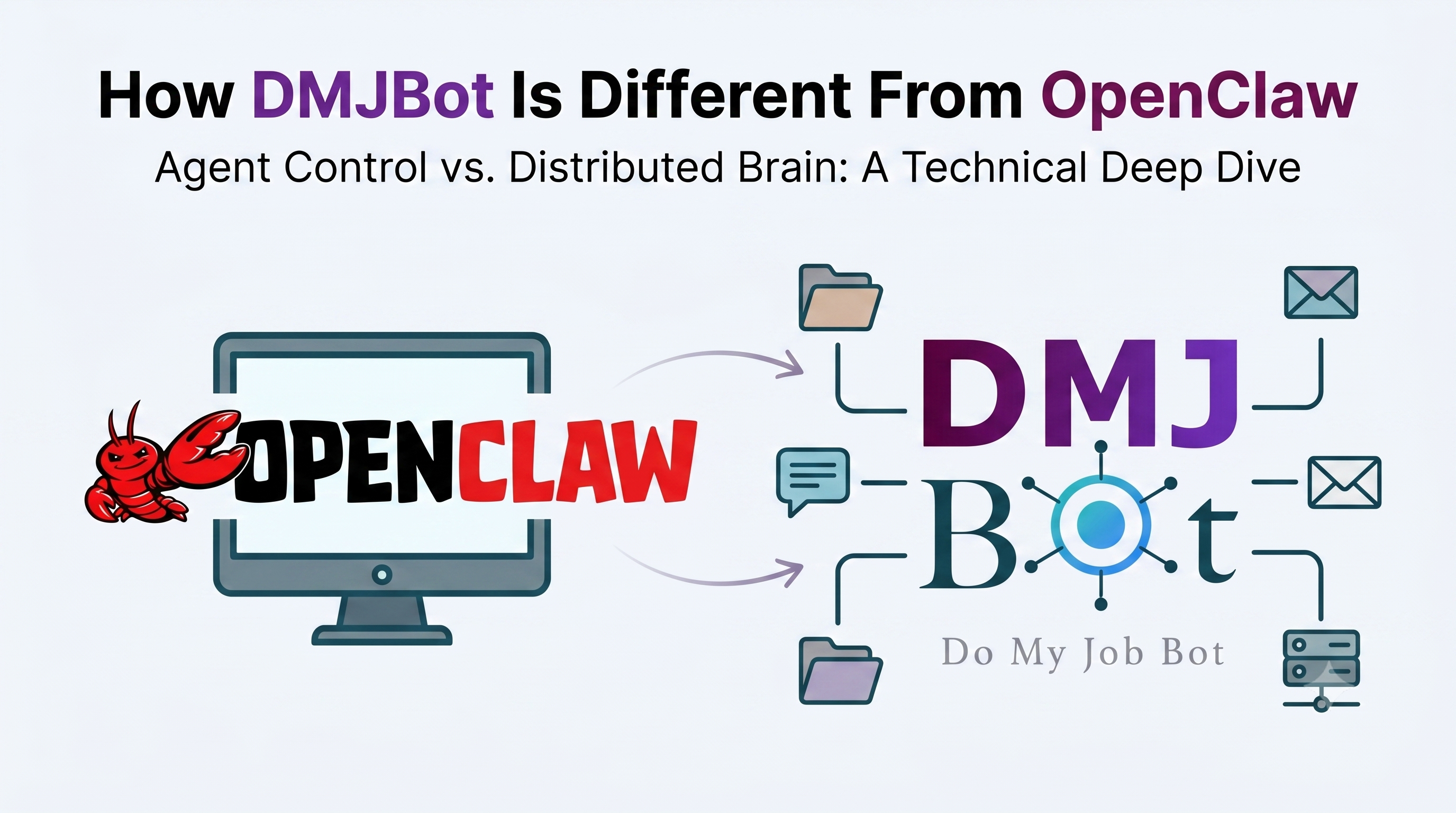
People sometimes ask how DMJBot compares to OpenClaw. It's a fair question — the goals look similar. But the two tools were built independently, and under the hood they could hardly be more different.
First, a clarification: DMJBot is not based on OpenClaw. We started building it before OpenClaw was released. We arrived at a similar ambition — an AI assistant that actually does your work — but the implementation is entirely our own.
Here are the two differences that matter most.
1. We don't take over your computer
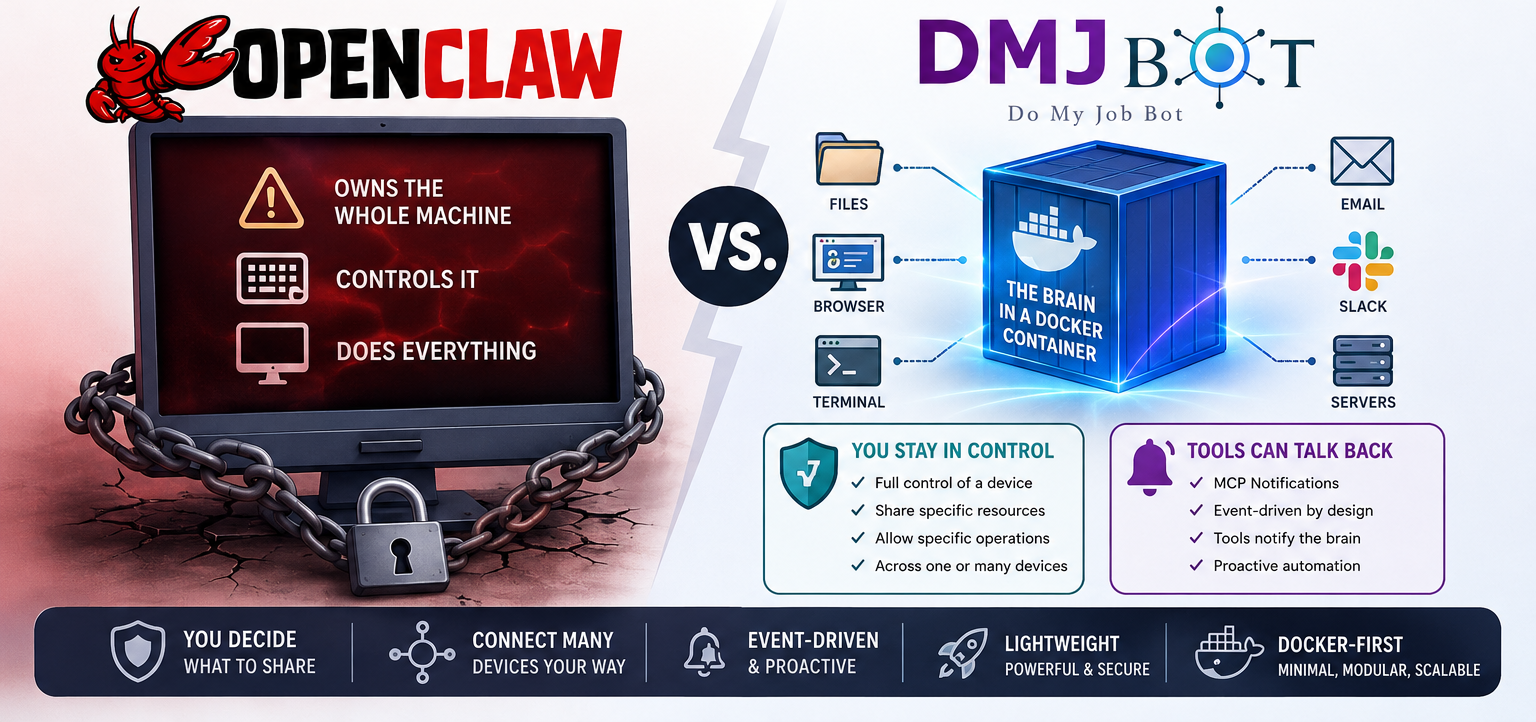
OpenClaw's model is to own a whole machine. It needs a full computer, it controls it, and it does everything there.
DMJBot takes the opposite approach. The only thing that runs is the brain, inside a Docker container. System requirements are minimal — it's just the orchestrator, not a desktop it has to occupy.
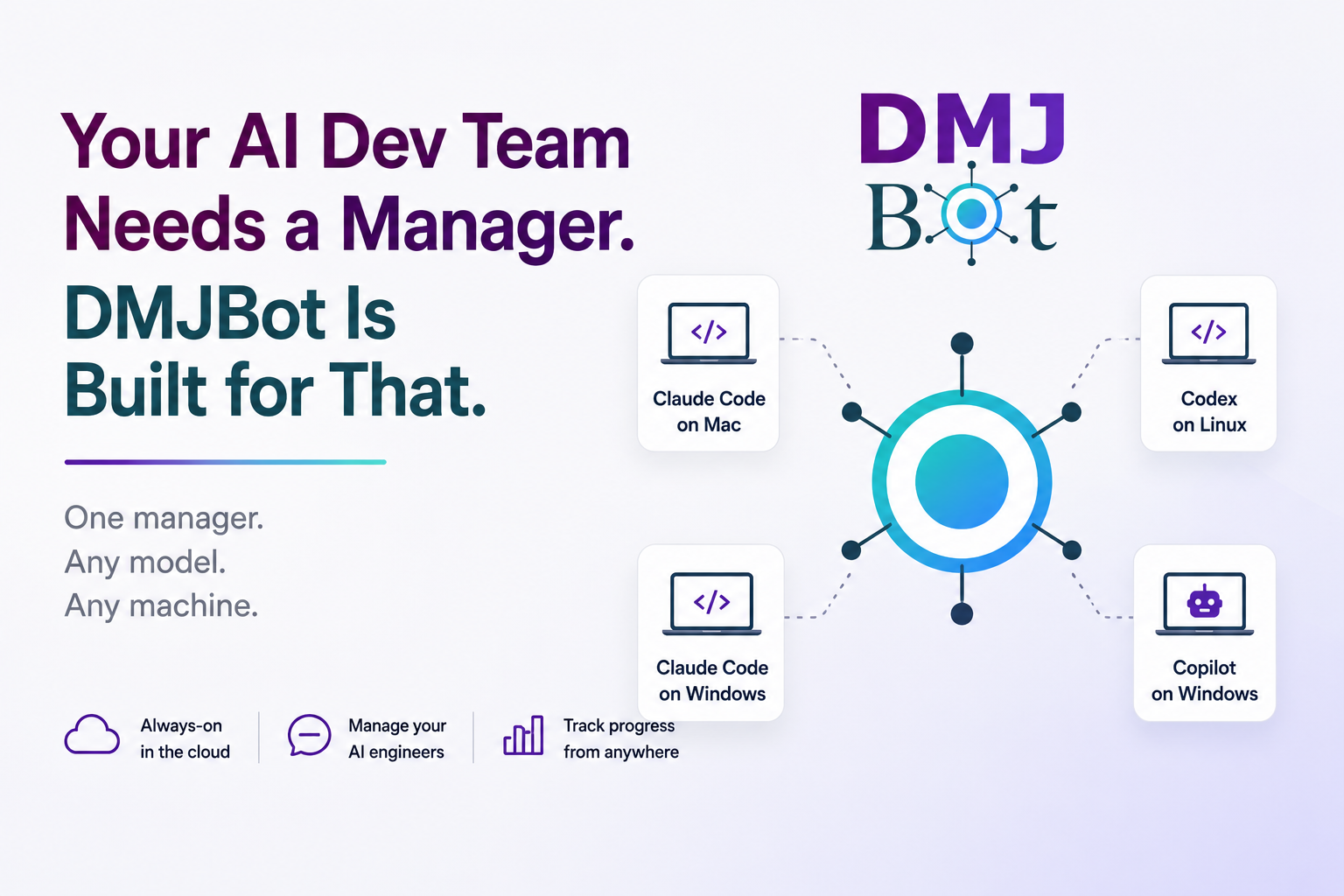
From there, you connect devices to it — one or many — and you decide how much each one shares:
- full control of a device, if you want that, or
- just some resources — say, a single folder, or
- only specific operations you explicitly allow.
So instead of handing one machine its entire life over to an agent, you give the brain exactly the reach you're comfortable with, across as many devices as you like. Security and control aren't bolted on — they're the starting point.
2. Tools can talk back — event-driven by design
The second difference is what makes DMJBot proactive instead of just reactive.
Most AI assistants are a one-way street: the brain calls a tool, the tool answers, done. Nothing happens unless you ask.
DMJBot uses MCP notifications — a feature no other AI assistant uses this way today. It makes the connection two-way: tools can speak to the brain, not just the brain to the tools. A new email lands, a Slack message arrives, a file changes, an event fires — and the tool tells the brain, which then acts on the instructions you gave it earlier.
That's what turns "answer my question" into "watch for this, and when it happens, do that" — real event-based automation, without you sitting in front of the screen.
In short
OpenClaw owns a computer and works when driven. DMJBot is a lightweight brain in a Docker container that connects to your devices on your terms, and — thanks to MCP notifications — acts on its own when something happens.
Same dream. Very different machine.